
2026 Top Compressor Tools for Global Buyers

Choosing reliable Compressor Tools in 2026 requires more than comparing prices on a supplier website. Global buyers must examine performance, safety, serviceability, and regional compatibility before placing an order. A compact workshop compressor may look efficient, yet its duty cycle can disappoint during continuous pneumatic work. Small details matter.

This guide reviews compressor tools through practical buying criteria. It considers air delivery, operating pressure, tank capacity, motor efficiency, noise levels, and maintenance access. Manufacturer specifications provide a starting point, but independent testing and verified user feedback add valuable context. Buyers should also confirm voltage, plug standards, documentation, warranty coverage, and available replacement parts. These checks can prevent costly delays after delivery.

No shortlist is perfect. Real workshops vary. A tool suited to automotive repair may perform poorly in construction or industrial production. Some advertised efficiency figures may depend on ideal conditions, clean filters, and stable power. That limitation deserves attention. By comparing technical evidence with hands-on requirements, purchasing teams can make more defensible decisions. The selections ahead focus on dependable operation, transparent specifications, and long-term value for international buyers. They are not a substitute for local compliance checks or professional risk assessments, but they offer a practical foundation for careful evaluation.
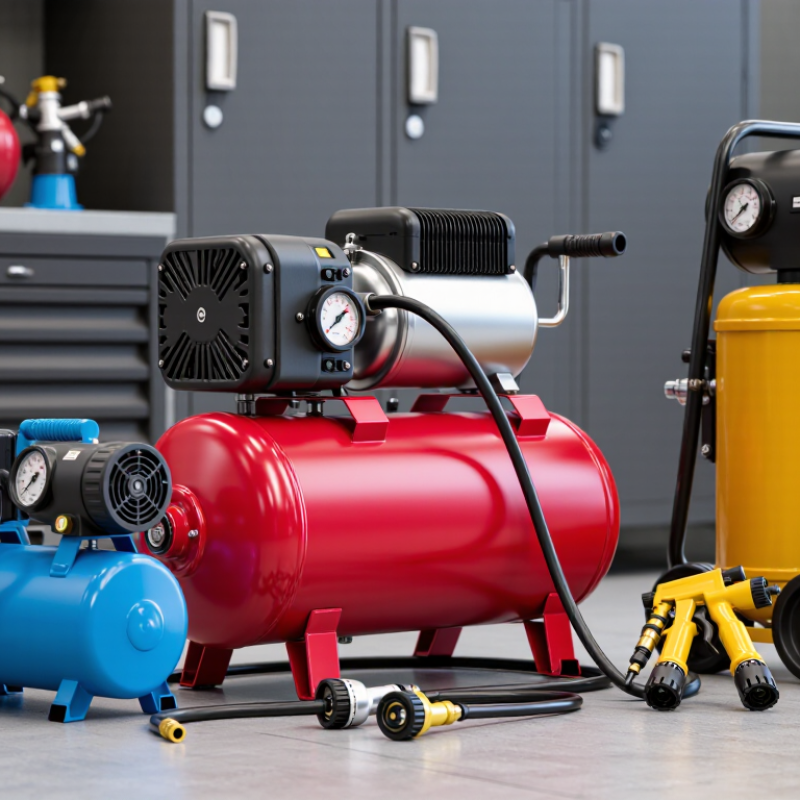
2026 Top Compressor Tools for Global Buyers

What Compressor Tools Are and How They Support Global Operations

2026 Top Compressor Tools for Global Buyers

What Compressor Tools Are and How They Support Global Operations

Compressor tools create, control, and deliver compressed air for industrial work. They include portable compressors, air receivers, dryers, filters, hoses, pressure gauges, and leak detectors. Each tool affects output quality and operating safety. Small details matter. A clear gauge supports accurate adjustments, while a moisture separator protects air lines from water damage. Buyers should assess the complete system, not only the compressor.

Global operations require careful checks before purchase. Confirm voltage, frequency, pressure range, airflow, and connection sizes for each destination. Local electrical requirements may differ. Humid coastal facilities often need stronger moisture control. Dusty sites may require better filtration and simpler cleaning access. Remote locations also need replaceable parts and clear maintenance instructions. Service access matters. Reliable suppliers should provide technical data, inspection records, user manuals, and warranty conditions in understandable language.

The best tool depends on the work environment. Do not judge equipment by price alone. Energy use, noise, heat, transport weight, and downtime can change the real cost. A cheaper unit may become expensive after repeated repairs. My own buying checklists have changed after seeing small specification errors delay installation. That lesson still needs reflection. There is no perfect tool list. Build a shortlist, test it with operators, and leave room for local feedback before scaling across multiple sites.

Key Compressor Tool Types and Their Industrial Applications

2026 Top Compressor Tools for Global Buyers

Key Compressor Tool Types and Their Industrial Applications

Choosing compressor tools starts with the process, not the catalog. In factories, reciprocating compressors support intermittent, high-pressure duties. They suit workshops, maintenance stations, and small production lines. Rotary screw compressors deliver steady airflow for continuous operations. They commonly power assembly tools, packaging machines, and automated systems. Centrifugal compressors serve large facilities requiring high flow and stable pressure. Typical applications include chemical processing, metal production, and utility plants.

Portable compressors offer practical support at construction sites and remote service areas. Pneumatic tools, including impact wrenches and grinders, depend on clean, consistent air. Oil-free systems are useful near food, pharmaceutical, and sensitive electronic production. Air dryers and filters protect equipment from moisture, particles, and oil carryover. These accessories are not optional in many demanding environments.

In my experience, buyers often compare pressure first. That can be a costly mistake. Flow rate, duty cycle, ambient temperature, and maintenance access matter equally. A compressor may meet its rated pressure but fail during peak demand. Energy performance also changes with load patterns and poor pipe design. No selection is perfect. Engineers should verify real operating data before purchase. I would also question impressive efficiency claims without test conditions, service records, and independent documentation. Worker training and routine inspection remain essential, even with advanced controls.

How to Compare Compressor Tools by Performance and Design

2026 Top Compressor Tools for Global Buyers

How to Compare Compressor Tools by Performance and Design

Comparing compressor tools requires more than reading maximum pressure on a product sheet. Start with airflow at the working pressure, measured in liters per minute or cubic feet per minute. A tool may advertise high pressure but deliver weak airflow under continuous use. Measure it. Test the compressor with the intended tool, hose length, and fitting size. In practical workshops, these details often explain unexpected performance loss.

Duty cycle also deserves close attention. A compressor rated for intermittent operation may overheat during repeated fastening, spraying, or inflation tasks. Check recovery time between cycles and listen for unusual vibration. Excessive noise can indicate poor balance, weak mounting, or an unsuitable installation surface. Small details matter.

Design affects reliability and daily comfort. Look for accessible filters, clearly marked controls, strong handles, and drain valves that do not require awkward access. A compact frame saves storage space, but limited ventilation can reduce motor life. Protection against dust and moisture should match the working environment and local safety requirements. Electrical compatibility is equally important for global buyers, including voltage, frequency, plug design, and certified protection features. Some comparisons still focus too heavily on power ratings. That approach is incomplete. The best choice depends on verified output, service access, operating conditions, and the user’s real workload.

2026 Top Compressor Tools for Global Buyers - How to Compare Compressor Tools by Performance and Design

Reference comparison of common industrial and professional compressor configurations. Performance figures are typical specification ranges for new equipment and should be verified against the supplier’s test conditions, ambient conditions, duty cycle, and applicable standards.

Compressor Type Typical Free Air Delivery (FAD) Typical Working Pressure Approximate Motor Range Typical Specific Power Duty Capability Oil Configuration Key Design Characteristics Maintenance Profile Best-Fit Applications
Portable Reciprocating Compressor 0.10–2.0 m³/min 7–12 bar(g) 0.75–15 kW Approximately 8–14 kW per m³/min Intermittent to moderate duty; commonly operated with rest periods Oil-lubricated or oil-free versions available Positive-displacement piston design; compact receiver-mounted packages; good pressure capability at low capital cost Periodic piston-ring, valve, lubricant, belt, and condensate-service checks Hand tools, service garages, workshops, small construction sites, and light pneumatic equipment
Oil-Injected Rotary Screw Compressor 0.7–50 m³/min 7–13 bar(g) 5.5–315 kW Approximately 6–8.5 kW per m³/min Continuous or high-duty operation; suitable for variable production demand Oil-injected compression with separator, oil cooler, and filtration circuit Twin-screw air end; smooth airflow; variable-speed drive options; package layouts may include an integrated dryer Scheduled oil, separator, intake-filter, oil-filter, cooler, and drive-system servicing Manufacturing plants, fabrication, automotive production, packaging, and general industrial air systems
Oil-Free Rotary Screw Compressor 1.0–40 m³/min 7–10 bar(g) 15–250 kW Approximately 7–11 kW per m³/min Continuous duty where compressed-air purity is critical No oil in the compression chamber; bearings and gears may use separate lubrication systems Dry screw elements; often uses multi-stage compression, intercooling, and advanced coating or sealing technologies Requires careful control of cooling, air-end condition, filters, seals, and water quality where applicable Food and beverage, pharmaceuticals, electronics, medical air, textiles, and sensitive process applications
Scroll Compressor 0.08–3.0 m³/min 6–10 bar(g) 1.5–30 kW Approximately 7–12 kW per m³/min Continuous duty with multiple-module sequencing; individual modules cycle as demand changes Oil-free compression chamber; oil may be present only in motor or bearing areas depending on design Orbiting scroll elements; low vibration and low noise; modular configuration improves part-load matching Generally low routine maintenance; intake filters, cooling paths, valves, and bearings still require inspection Dental and medical systems, laboratories, light manufacturing, instrument air, and indoor installations
Rotary Vane Compressor 0.2–10 m³/min 4–10 bar(g) 2.2–75 kW Approximately 7–11 kW per m³/min Moderate to continuous duty, depending on cooling and vane material Usually oil-lubricated; oil-free variants are available for selected low-flow duties Eccentric rotor with sliding vanes; compact footprint; stable flow and relatively low pulsation Vane, filter, oil, separator, and cooling-system replacement intervals are important lifecycle factors Vacuum-pressure systems, workshops, printing, packaging, pneumatic conveying, and small process lines
Centrifugal Compressor 25–1,000+ m³/min 3–12 bar(g) per stage; higher pressure may require multiple stages 200–10,000+ kW Approximately 5.5–8 kW per m³/min near design load Designed for continuous, high-volume operation with stable demand Compression chamber is normally oil-free; gearbox and bearing arrangements vary by design Dynamic impeller-based compression; high flow capacity; low pulsation; sensitive to surge and operating-point changes Requires specialist inspection of impellers, bearings, seals, inlet controls, coolers, and anti-surge systems Large process plants, petrochemicals, steel, refineries, utilities, and high-volume air separation
High-Pressure Reciprocating Compressor 0.05–20 m³/min 20–350+ bar(g), usually through multiple stages 5.5–1,000+ kW Highly dependent on pressure ratio and staging Intermittent, batch, or continuous duty depending on cylinder cooling and package design Oil-lubricated or oil-free cylinder designs available Multi-stage piston compression with intercoolers; strong pressure capability; higher pulsation and vibration than rotary designs More intensive servicing of valves, piston rings, packing, lubricating systems, pulsation dampers, and safety devices Gas filling, pressure testing, PET production, gas processing, and high-pressure industrial systems
Two-Stage Piston Compressor for Professional Workshops 0.25–1.5 m³/min 10–15 bar(g) 2.2–11 kW Approximately 8–15 kW per m³/min Intermittent or short-cycle operation; not normally selected for uninterrupted plant demand Most commonly oil-lubricated Low-pressure and high-pressure cylinders with intercooling; receiver capacity helps manage short demand peaks Regular oil changes, belt alignment, drain maintenance, valve inspection, and receiver safety checks Automotive repair, metalworking, spray painting, tire service, and maintenance departments
Variable-Speed Compressor Package 0.5–50 m³/min, depending on compressor element 7–13 bar(g), depending on configuration 5.5–315 kW Usually lowest at part-load conditions when correctly sized Well suited to fluctuating demand; continuous duty subject to minimum and maximum speed limits Oil-injected, oil-free screw, or other compressor elements may be used Inverter-controlled motor speed adjusts output; reduces unloaded running and may lower energy use under variable demand Electrical drive, cooling, motor bearings, sensors, filters, and control software require planned service Facilities with changing shifts, multiple production lines, seasonal demand, or frequent load variation

Buyer evaluation note: Compare FAD using the same reference conditions and test method, preferably ISO 1217 for industrial compressors. Confirm pressure at the point of use, pressure drop through treatment equipment, sound level, installation altitude, ambient temperature, electrical supply, air-quality class under ISO 8573-1, receiver volume, warranty coverage, spare-parts availability, and total cost of ownership before purchase.

Top Compressor Tools for Different Global Buyer Requirements

2026 Top Compressor Tools for Global Buyers

Top Compressor Tools for Different Global Buyer Requirements

Different buyers need different compressor tools, not simply higher pressure. A small workshop may prioritize portability, low noise, and easy filter replacement. A continuous-production site needs stable flow, remote monitoring, and efficient cooling. For food, laboratory, or electronics applications, oil-free air and documented cleanliness can matter more than maximum output. ISO 8573-1 helps buyers define air quality requirements clearly, including particles, water, and oil.

Energy performance deserves close attention. The U.S. Department of Energy reports that compressed air can consume 10–15% of a manufacturing plant’s electricity. The IEA also estimates that motor-driven systems represent about 70% of industrial electricity use. Variable-speed control, leak detection, correctly sized receivers, and heat recovery can reduce waste. Check the data sheet carefully. Free-air delivery is more useful than theoretical displacement.

Global purchasing adds practical details. Confirm voltage, frequency, ambient temperature limits, plug type, spare-part access, and local service capacity. A tropical site may need stronger corrosion protection. A remote mine may value simple maintenance over advanced software. Buyers often underestimate noise and condensate management. That mistake becomes expensive. I would also question optimistic savings claims unless they include duty cycle, inlet conditions, and measured operating hours. No tool fits every plant.

2026 Top Compressor Tools for Global Buyers

Top Compressor Tools for Different Global Buyer Requirements

The chart compares typical maximum working-pressure ranges for common compressor tool categories. Tire inflators prioritize portability, portable piston compressors suit light site work, workshop compressors support general pneumatic tools, and industrial rotary screw compressors are designed for continuous production use. Actual specifications vary by configuration, local voltage, duty cycle, and safety requirements.

International Purchasing, Compliance, and Maintenance Considerations

2026 Top Compressor Tools for Global Buyers

International Purchasing, Compliance, and Maintenance Considerations

Global compressor purchasing requires more than comparing pressure and price. Confirm the required flow rate, duty cycle, voltage, frequency, and ambient temperature before requesting quotations. A unit designed for a mild climate may struggle in a dusty workshop. Ask suppliers for performance curves, material specifications, inspection records, and a clear spare-parts list. Import classification, electrical conformity, pressure-vessel requirements, and local documentation must also be checked before shipment. Requirements differ between markets, and assumptions can be expensive.

Tips: Request a pre-shipment inspection. Verify serial numbers and manuals. Keep compliance documents with the equipment. Check whether local technicians can service the compressor. A low purchase price can become costly when filters, seals, or control parts are unavailable. Confirm warranty coverage, response times, and training before signing. Also examine packaging, corrosion protection, and unloading instructions. These details matter at the warehouse door.

Maintenance planning should begin during procurement. Build a schedule for oil analysis, filter replacement, condensate drainage, belt inspection, and vibration checks. Record operating hours and pressure trends from the first day. Unexpected noise often appears before a major failure. However, maintenance intervals should not be copied blindly from another site. Dust, humidity, load variation, and operator habits change real service needs. One practical weakness remains common: buyers sometimes focus on technical specifications while neglecting long-term support. A careful review may prevent that mistake.

CAMaster Logo