Who Is the Best CNC Router Manufacturer in China?

Choosing the best CNC router manufacturer in China is not as simple as comparing prices or reading a polished catalog. The right supplier depends on what you make, how often you run the machine, and the materials you cut. A cabinet shop routing plywood has different needs from a workshop engraving acrylic or machining aluminum. Small details matter: a rigid gantry, a well-leveled vacuum table, and a spindle that stays steady during long jobs can affect daily results.

This guide looks at manufacturers through practical, verifiable criteria rather than bold claims. It considers machine construction, controller options, available sizes, factory testing, warranty terms, spare parts, and after-sales support. Buyers should ask for clear specifications, recent machine videos, sample cuts on their own material, and references from customers with similar workloads. A low quote can hide extra costs for installation, tooling, or shipping. There is no perfect shortlist. I may still be missing a useful supplier, and a strong factory is not automatically the right fit for every buyer.

The goal is to help readers compare options with fewer assumptions. Look for evidence, not just promises. Check how the manufacturer handles technical questions before placing an order, and confirm what support is available after delivery. With those checks, you can judge which cnc router maker best matches your production needs, budget, and expectations.
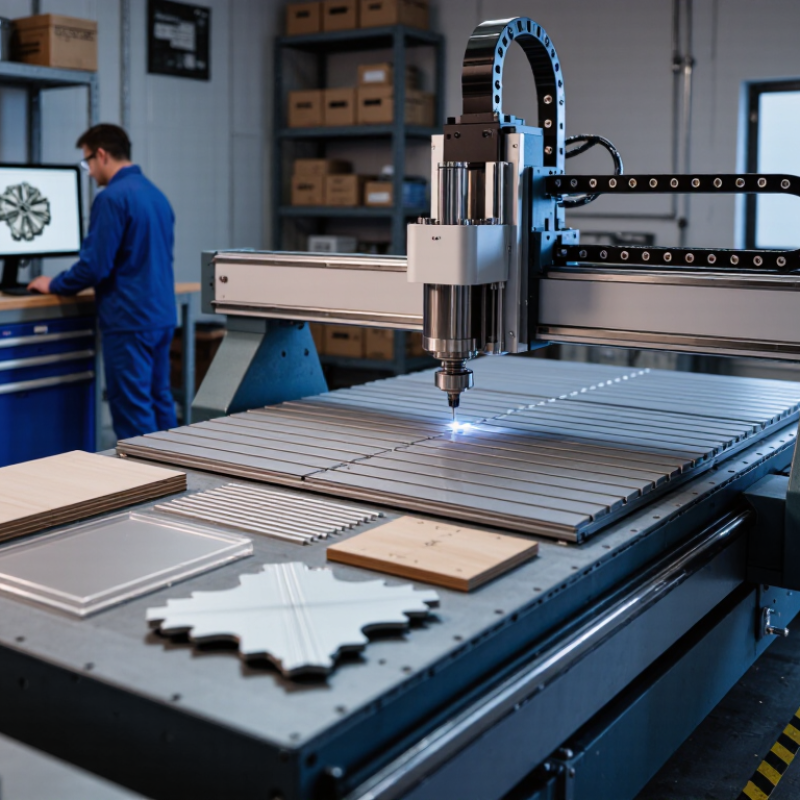
Who Is the Best CNC Router Manufacturer in China?

What Defines a Leading CNC Router Manufacturer in China?

What Defines a Leading CNC Router Manufacturer in China?

A leading manufacturer proves machine performance under real cutting conditions, not only through polished brochures. Ask for a documented acceptance test using your material, tool, and feed rate. On a 1,300 × 2,500 mm sheet, check edge quality, pocket depth, and repeatability across the full table. A glossy brochure is not proof. Request measurement records, maintenance intervals, and details about spindle and controller support.

Manufacturing capacity matters, but it does not guarantee precision. The International Federation of Robotics’ World Robotics 2024 report recorded 276,288 industrial robot installations in China during 2023, about 51% of global installations. This reflects a substantial automation ecosystem, not a direct measure of router quality. Buyers still need machine-specific evidence, such as positioning tests, component traceability, and consistent inspection procedures.

After-sales support is another defining test. Confirm response times, spare-part availability, remote diagnostics, and whether technicians can explain calibration steps clearly. Ask how the machine behaves after hours of continuous cutting, when heat can affect accuracy. Not enough. A careful supplier should also describe limitations, including materials or workloads that require slower settings. Some evaluations miss this point: the best choice is not always the machine with the highest advertised speed.

How China's CNC Router Industry Is Structured

China’s CNC router industry is best understood as a supply chain, not a single group of machine builders. Component suppliers provide spindles, motion systems, controllers, frames, and cutting tools. Machine manufacturers assemble these parts into models for woodworking, signage, plastics, and light metal work. Integrators and dealers then configure machines, install them, and provide training or maintenance. Capabilities vary. A clean factory floor alone does not prove consistent accuracy or dependable after-sales support.

The wider automation base is substantial. The International Federation of Robotics reported 276,288 industrial robot installations in China in 2023, equal to 51% of global installations. This figure describes industrial robots, not CNC routers, so it should not be used as a router-market count. That gap matters. Public reports rarely separate router makers by production volume, export share, or technical level. Buyers should compare measurable details: spindle power, repeatability, frame rigidity, controller access, and service response times. A machine may look similar on paper yet behave differently when cutting a full sheet of plywood. Even detailed specifications can miss that.

Who Is the Best CNC Router Manufacturer in China? – How China's CNC Router Industry Is Structured
There is no single best manufacturer for every buyer. China’s CNC router supply chain includes complete-machine makers, OEM/ODM producers, component suppliers, and system integrators. The right choice depends on the material, production volume, required accuracy, service needs, and total cost of ownership.
Industry Layer Typical Role Common Products or Capabilities Best Fit For What Buyers Should Verify
Complete-machine manufacturers Design and assemble finished CNC router systems, often combining the frame, motion system, spindle, controls, and software. Standard-format routers, multi-axis configurations, workholding options, and machine-specific support. Buyers seeking one supplier for the machine, commissioning, training, and after-sales support. Factory capability, machine build quality, acceptance-test results, documentation, warranty terms, and spare-parts availability.
OEM/ODM producers Build machines to a buyer’s specification or produce configurable platforms for other sellers and distributors. Custom dimensions, private-label production, configuration changes, and batch manufacturing. Distributors, machine brands, and buyers with defined specifications or repeat-order requirements. Which parts are made in-house, change-control procedures, sample approval, production consistency, and responsibility for service.
Component and subsystem suppliers Supply parts used by machine builders rather than necessarily selling complete routers. Frames, linear-motion components, drives, spindles, controllers, dust-extraction equipment, and tooling. Machine builders and technically equipped buyers sourcing parts or planning a custom system. Specifications, compatibility, traceability, replacement-part lead times, and the complete machine supplier’s integration responsibility.
System integrators and application specialists Configure machines, tooling, software, workholding, and process settings for a specific production task. Application testing, automation cells, production-line integration, and process setup. Factories with specialized materials, workflows, or automation requirements. A demonstrated sample process, scope of integration, safety provisions, commissioning plan, and ongoing technical support.
Export-oriented suppliers and sales channels Coordinate international sales, shipping, documentation, and sometimes local or remote support; they may be manufacturers or trading intermediaries. Export packaging, shipping coordination, manuals, remote assistance, and distributor support. Overseas buyers who need help with logistics, documentation, and cross-border communication. Whether the seller is the factory or an intermediary, delivery terms, electrical compliance for the destination, installation support, and service response arrangements.
Practical Comparison Criteria
Evaluation Dimension Why It Matters Useful Evidence to Request
Application match A machine suited to wood, plastics, composites, or non-ferrous materials may not be suitable for every other material or process. A test cut using the buyer’s material, tooling, and representative production file.
Accuracy and repeatability Work quality depends on the whole machine and setup, including mechanical structure, motion components, calibration, tooling, and operating conditions. Written test methods and results for positioning, repeatability, and sample-part inspection.
Service and lifecycle support Downtime, maintenance, training, and replacement-part access affect the cost of operating a machine over time. Warranty details, service response process, training plan, parts list, and expected parts lead times.
Total landed cost The purchase price does not include every cost of getting a machine into production. A written quotation covering machine configuration, packaging, shipping, installation, training, and excluded items.
Supplier transparency Clear responsibility for design, assembly, testing, and support helps buyers assess delivery and service risks. A live factory or production-process review, machine serial documentation, and a clear point of contact for technical issues.
Bottom line: The best choice is the supplier that can demonstrate a suitable machine and repeatable process for the buyer’s application, while providing clear specifications, dependable support, and a transparent total-cost quotation.

Which Manufacturers Are Commonly Considered Among the Best?

Which Manufacturers Are Commonly Considered Among the Best?

There is no single, universally accepted ranking of Chinese CNC router manufacturers. Buyers often compare established industrial machine builders, woodworking specialists, and custom-system integrators. Each group serves different needs. An industrial builder may offer a rigid steel frame and a broad service network, while a woodworking specialist may focus on clean cuts in plywood, MDF, and solid wood. Custom integrators can adapt table size, spindle power, and tooling to a particular workshop.

Look beyond catalog claims. Ask for a sample cut on material similar to yours, and inspect the edge for tear-out and burn marks. Check how the machine handles dust, tool changes, and long production runs. A clear parts list and accessible technical support matter when a spindle stops mid-shift. Still, a polished demonstration cannot prove years of reliability; that is where I would want more evidence.

Tips: Request references from buyers with similar workloads. Confirm service response times, spare-part availability, and warranty terms in writing. If possible, visit the factory or arrange a live test. A low purchase price can look attractive, but downtime has a cost too.

Choosing a CNC Router Manufacturer: Compare Worktable Capacity

These are representative CNC router table formats offered in the market; the bar values show table area calculated from each format’s dimensions. They are examples, not a manufacturer ranking. The best manufacturer depends on your material, required working area, accuracy, service, and budget.

How to Compare Chinese CNC Router Manufacturers

Comparing Chinese CNC router manufacturers means checking the machine, the evidence, and the support behind the sale. Ask for a sample cut using your material, tool, and target feed rate. Inspect the edge finish, pocket depth, and repeatability—not just the showroom demonstration. A polished brochure can still leave gaps. Request documented positioning tests and clarify how accuracy was measured.

ISO 230-2:2014 describes methods for testing machine-tool positioning accuracy and repeatability. Ask whether the quoted figures come from a test report, and under what conditions. Compare spindle power, working area, frame construction, controller options, and dust extraction against your actual workload. Check what the warranty excludes, how spare parts are shipped, and whether remote troubleshooting is available. Small details matter.

Automation figures can offer context, but they do not rank router makers. The International Federation of Robotics reported 541,302 industrial robot installations worldwide in 2023 in World Robotics 2024. That broader trend makes integration worth discussing; it is not CNC-router-specific evidence. Ask each supplier to explain interfaces, safety features, and upgrade paths. I may overvalue a clean test cut; long-term service records deserve equal attention.

What Factors Should Buyers Check Before Choosing a Manufacturer?

The best CNC router manufacturer in China depends on your materials, workload, and required accuracy. A machine for cutting plywood all day needs different features from one handling aluminum panels. Check the frame construction, spindle specifications, motion system, and controller options. Ask for measured positioning accuracy and repeatability, not just a claim in a brochure. A heavy frame may reduce vibration, but the complete machine setup matters too.

Request a sample cut using your own material and toolpath. Inspect the edges, dimensions, and finish, then ask how the machine performs after extended operation. Review the electrical drawings, maintenance schedule, warranty terms, and availability of common spare parts. Confirm who handles installation and operator training, and how quickly technical support usually responds. A factory visit can still leave questions; one polished demonstration is not a full production test. Compare written specifications with what you can verify.

Tips: Ask for references from buyers with similar applications. Get service commitments and spare-part lead times in writing. If an answer is vague, ask again. A lower price may look attractive, but downtime has a cost.

CAMaster Logo