
Choosing among China’s top 10 MPO Cable manufacturers requires more than comparing factory prices. A reliable supplier must prove performance through test records, traceable materials, and consistent production controls. Connector polish, fiber alignment, polarity, insertion loss, and return loss can determine whether a data center link performs smoothly or fails during installation.
Small details matter. A clean end face. A readable test report. A stable latch. These are practical signs of manufacturing discipline. Fiber-optic specialist John D. Healy observes, “An MPO Cable is only as reliable as its alignment, cleanliness, and test evidence.” This principle should guide every comparison, although supplier claims still require independent verification.
This article introduces ten leading Chinese MPO Cable manufacturers and examines their strengths from an engineering and purchasing perspective. The evaluation considers product range, factory experience, quality assurance, customization ability, delivery stability, certifications, and after-sales support. It also looks beyond polished websites and impressive catalogs. Can the manufacturer maintain polarity accuracy across large orders? Does every shipment include clear inspection data? Can technical staff solve a field problem without delay?
No ranking is perfect. Market information changes, and even reputable manufacturers may perform differently across product lines. That is worth remembering. The best MPO Cable supplier is not always the cheapest or the largest. It is the one that matches your network design, installation environment, budget, and long-term reliability expectations.
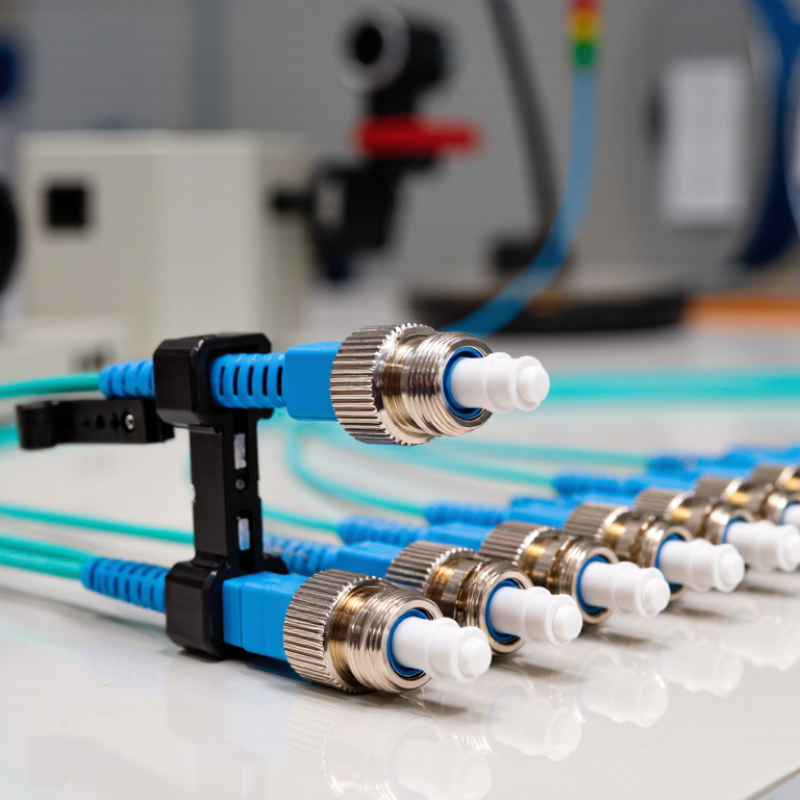
MPO cables are high-density fiber assemblies with multiple fibers inside one connector.
MPO means Multi-fiber Push-On. A single connector can carry 8, 12, 24, or more fibers. This design saves rack space and reduces cable congestion. The connector is dense. Small errors matter.
They are widely used in data centers, cloud computing rooms, and telecommunications networks. Technicians often connect MPO trunks between patch panels, cassettes, switches, and server cabinets.
Parallel optical systems can transmit several channels through separate fibers. Breakout assemblies can also divide one MPO connection into individual duplex links. This makes upgrades faster when equipment changes.
Reliable MPO installation requires more than matching connector shapes. Polarity, key orientation, fiber count, and end-face cleanliness must be checked carefully. A small contaminant can increase insertion loss or interrupt several channels at once. Testing with an optical loss test set provides measurable evidence, while an inspection scope helps identify scratches and dust.
Bend radius also matters, especially inside crowded cabinets. It is not foolproof. Perfect drawings do not guarantee perfect links.
In real projects, labeling can be inconsistent, and technicians may overlook polarity during rapid deployment. Selecting a manufacturer should therefore involve documented test results, dimensional consistency, applicable standards, and traceable quality control.
Evaluating China’s MPO cable manufacturers requires more than comparing prices or counting listed products. A polished website proves little. Request factory photos, test records, and a traceable sample before making a decision. Experienced suppliers should explain connector types, fiber counts, polarity methods, and insertion-loss limits without vague language.
Ask for measured results from an optical test system, not only a promised specification. Check insertion loss, return loss, end-face geometry, polarity, and connector cleanliness. A reliable manufacturer can provide batch numbers and calibration records. Inspect the cable jacket, pull strength, fanout length, and boot condition. Small details often reveal production discipline.
Factory experience matters when projects involve high-density data centers or unusual trunk lengths. Discuss drawings with an engineer, then compare the approved sample with the mass-production unit. Confirm raw-material sources, process inspection, packaging, lead time, and replacement procedures. I have learned that the cheapest quotation can hide inconsistent polishing or weak documentation. No factory is perfect. A thoughtful evaluation should record defects, not ignore them, and leave room for a second sample when the first result feels unusually good.
A practical procurement scorecard for MPO cable suppliers. The weighting reflects the main factors that influence data-center cable quality, deployment reliability, and total cost.
Use these weights when comparing suppliers: optical performance and standards compliance should receive the highest priority, followed by manufacturing consistency, customization capability, delivery reliability, and commercial value.
China’s top ten MPO cable manufacturers are best judged by production evidence, not online rankings. The strongest suppliers typically operate controlled fiber-polishing lines, automatic polarity equipment, and inspection laboratories. Several focus on high-density data center assemblies. Others specialize in trunk cables, breakout harnesses, or custom fiber counts.
In practical purchasing work, I would examine ten supplier profiles. The first should show stable insertion-loss results. The second should provide repeatable return-loss data. The third needs verified polarity control. The fourth should support 8-, 12-, and 24-fiber designs. The fifth should offer low-smoke, halogen-free jackets. The sixth must document connector-endface inspection. The seventh should handle short production runs without poor consistency. The eighth should provide traceable test reports. The ninth should support high-temperature and bending tests. The tenth should maintain clear quality records and responsive engineering support.
Ask for samples. Test them independently.
A reliable manufacturer should state fiber type, connector grade, cable diameter, polarity method, and test wavelength. It should also explain cleaning procedures before shipment. Factory photographs are useful, but they are not proof. I have seen attractive samples fail after repeated mating cycles. That detail is easy to overlook. My ranking would remain provisional because pricing, lead time, and batch quality can change. Even experienced buyers sometimes trust certificates too quickly. On-site audits, random sampling, and current test data provide stronger evidence than polished claims.
Comparing the top ten MPO cable manufacturers requires more than checking price or catalog size. The real differences appear in testing, customization, and support after delivery. Start with measurable data. Review insertion loss, return loss, polarity, and endface inspection records. Reliable manufacturers provide test results for every production batch, not only selected samples.
A strong supplier should explain its manufacturing process clearly. Look for controlled fiber alignment, consistent connector polishing, and verified cable geometry. Factory experience matters when projects require different fiber counts, jacket materials, or breakout lengths.
Some manufacturers offer faster customization, while others provide broader compatibility with high-density panels. Their technical teams should answer practical questions about bend radius, cleaning procedures, and installation limits.
Documentation matters too. Check whether product labels support traceability from shipment to production lot. Compare sample quality before placing a large order. A cable may look excellent but perform poorly after repeated handling. That detail is easy to miss. No ranking is perfect, because project conditions change the result. A data center may value low loss, while a telecom contractor may prioritize rugged jackets and delivery consistency. One weakness can still affect the whole system. Buyers should compare warranty terms, replacement procedures, and communication speed alongside laboratory results. A polished brochure cannot replace transparent evidence.
Choosing the right China MPO cable manufacturer depends on your network, not a ranking alone. A data-center installer may need 12-fiber or 24-fiber trunks, while a telecom project may require different jackets, lengths, and connector polish. Ask for a clear datasheet, insertion-loss results, return-loss results, and polarity diagrams. Small details matter. In real installations, a missing polarity label can waste hours during testing. A capable supplier should explain its testing process, equipment calibration, and fiber inspection records. It should also provide samples before volume production.
Fit also means manufacturing control. Check whether the factory performs end-face inspection, interferometer testing, and 100% continuity checks. Request reports linked to batch numbers, not generic screenshots. Confirm compatibility with your adapters, cassettes, and transceivers. This prevents expensive rework. Ask about bend radius, pull strength, flame rating, and operating temperature. The answers should match your regional codes and project specifications. A reliable manufacturer communicates tolerances honestly instead of promising every result. That honesty is useful.
Lead time deserves practical testing. Send a small pilot order and measure response speed, packing quality, dimensional accuracy, and test consistency. Do not judge quality from polished catalogs alone. I have seen attractive samples fail when cable lengths varied by a few centimeters. That was not catastrophic, but it slowed rack installation and exposed weak inspection habits. Evaluate engineering support, replacement procedures, documentation, and export experience. The best fit is the supplier that can repeat your required performance, communicate clearly, and improve when your feedback reveals a gap.