How to Choose the Best Laser Engraver for Your Needs?
Choosing the right laser engraver can greatly impact your projects. With so many options available, it’s vital to understand your needs. Laser engravers come in different types, sizes, and power levels, each suited for specific tasks.
When selecting a laser engraver, consider the materials you plan to work with. Some machines excel at engraving wood, while others handle metals and acrylics better. Think about the precision you desire. A higher-end model may provide more detailed results but could be more complicated to use.
Moreover, budget plays a crucial role. While investing in a good machine pays off, cheaper options may limit your capabilities. Research customer reviews and expert opinions to find a reliable engraver. Reflect on your experience and comfort level with technology. This self-assessment will help guide your decision. Finding the best laser engraver blends practicality with a touch of creativity.
Understanding the Different Types of Laser Engravers Available
When selecting a laser engraver, understanding the various types available is crucial. There are mainly three categories: CO2, fiber, and diode laser engravers. Each type has distinct capabilities and limitations. CO2 lasers are versatile; they work well on wood, acrylic, and leather. They deliver high-quality results but often require more maintenance due to tube wear. According to industry reports, CO2 lasers comprise about 70% of the market, favored for their efficiency in engraving intricate designs.
Fiber lasers stand out for their ability to engrave metals and thermoplastics. They utilize high-intensity beams, making them ideal for industrial applications. Market analysis indicates that fiber lasers are rapidly growing, projected to reach a value of over $2 billion by 2026. However, they may not be suitable for all materials, limiting their versatility compared to CO2 options.
Diode engravers are the least powerful but offer unique benefits for hobbyists. They are compact and affordable, making them accessible for home use. Yet, their engraving quality may not meet professional standards. This limitation can be frustrating for users expecting high precision. As the market evolves, it's essential to weigh these factors carefully to select the engraver that aligns with specific needs and projects.
How to Choose the Best Laser Engraver for Your Needs? - Understanding the Different Types of Laser Engravers Available
| Type of Laser Engraver |
Best For |
Typical Wattage |
Engraving Speed (mm/s) |
Material Compatibility |
| CO2 Laser Engraver |
Wood, Acrylic, Glass |
30W - 150W |
100 - 1000 |
Wood, Acryl, Glass, Leather |
| Fiber Laser Engraver |
Metal, Plastic |
20W - 50W |
500 - 800 |
Metal, Plastic, Anodized Aluminum |
| Diode Laser Engraver |
Light Materials |
1W - 10W |
50 - 300 |
Wood, Paper, Light Plastics |
| UV Laser Engraver |
Delicate Items |
5W - 20W |
100 - 400 |
Glass, Ceramics, Certain Plastics |
Evaluating Your Specific Engraving Needs and Materials
When selecting a laser engraver, it's essential to evaluate your specific engraving needs and the types of materials you plan to work with. Different materials require different engraving techniques. For instance, wood, acrylic, and metal all react uniquely to laser engraving. Understanding these differences can guide you in choosing the right equipment and settings for optimal results.
Consider the precision and depth of engraving required for your projects. Delicate designs may need a laser engraver that can handle fine details exceptionally well. You might find that some machines excel at cutting through thicker materials, while others are better suited for shallow engravings. This can create frustration if you overlook these factors in your decision-making process.
Your choice also depends on the scale of your projects. Are you engraving items for a small craft business, or are you focusing on personal hobbies? This affects not only the type of engraver to consider but also the safety features and ease of use. Taking time to research and reflect on these aspects can lead to better outcomes and enhance your crafting experience.
Key Features to Consider When Choosing a Laser Engraver
When selecting a laser engraver, several key features demand your attention. Power is crucial; it defines the material you can work with. A higher wattage allows for deeper engraving on tougher materials. Consider your projects too. Whether you're engraving wood, glass, or metal, the right machine will excel on specific surfaces.
Another vital aspect is the engraving area. This dictates the size and scale of your creations. Measure the objects you plan to engrave to ensure the machine fits your needs. Look for adjustable settings, as they provide flexibility in the depth and intensity of your engravings. This versatility can improve your results, but it also might lead to challenges if you misset adjustments.
Software compatibility is essential too. A user-friendly interface can make or break your experience. Some software can be complex, causing frustration. It's essential to explore options that suit your skill level. Effective support and documentation ease the learning curve but may still leave room for confusion. Ultimately, reflecting on your requirements will guide you toward a suitable choice.
Comparison of Key Features in Popular Laser Engravers
Budget Considerations for Laser Engraving Equipment
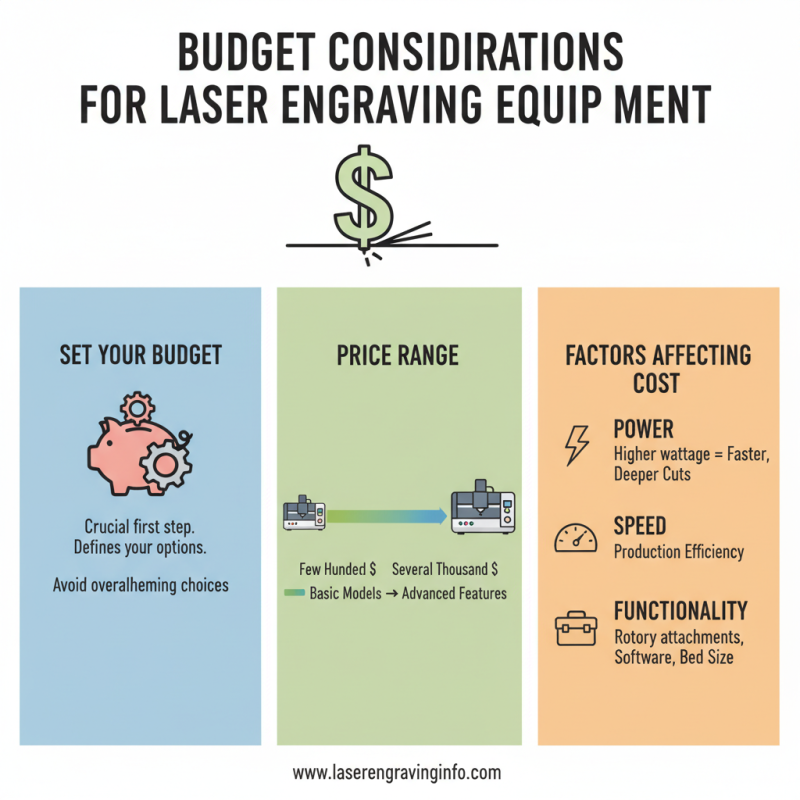
Budget considerations play a critical role in selecting the best laser engraver. It’s essential to set a clear budget before diving into the options. Prices for laser engravers can vary widely, typically ranging from a few hundred to several thousand dollars. This variation reflects the machine's power, speed, and functionality. Understanding your financial limits will help narrow down choices and avoid overwhelming options.
When evaluating engravers, consider what features are truly necessary. A beginner might only need basic engraving capabilities. In contrast, professionals may require advanced features such as higher wattage for faster cutting. Balancing quality and price is crucial. Cheap machines might save money upfront but could lead to higher costs later due to repairs or replacements. Reflection on past experiences can guide decisions. If you’ve faced issues with budget machines, take that into account. Investing in a reliable engraver can save time and frustration in the long run.
Additionally, remember that ongoing costs contribute to the overall budget. Supplies like replacement lenses or engraving materials can add up quickly. It’s wise to research these factors early in the buying process. Consider what is included in the purchase. Not all systems come with the necessary software or accessories. Thus, it’s vital to assess total costs beyond the initial price tag. Make thoughtful investments, prioritizing long-term value over short-term savings.
Researching Brands and Customer Reviews for Quality Assurance
When selecting a laser engraver, customer reviews serve as a vital resource. Many consumers rely on platforms that aggregate feedback. According to recent industry reports, around 70% of potential buyers read reviews before making decisions. This statistic highlights the credibility of shared experiences. A thorough examination of feedback can reveal hidden strengths and weaknesses.
Diving deeper into reviews can yield invaluable insights. Users often share real-life performance scenarios. This can include speed, precision, and even customer support experiences. For example, a review might detail how a specific model performed with acrylic versus wood. Benchmarking against competitor models can reveal significant differences in capabilities. Such comparisons aid in understanding which engravers excel in specific applications.
However, not all reviews are equally helpful. Some may lack depth or context. Readers should seek patterns rather than isolated opinions. Not every five-star rating translates to overall excellence. A balanced approach to understanding feedback is essential. A combination of personal experiences and broader data points can lead to informed choices.