
How to Choose a Central Air Conditioner Pump?

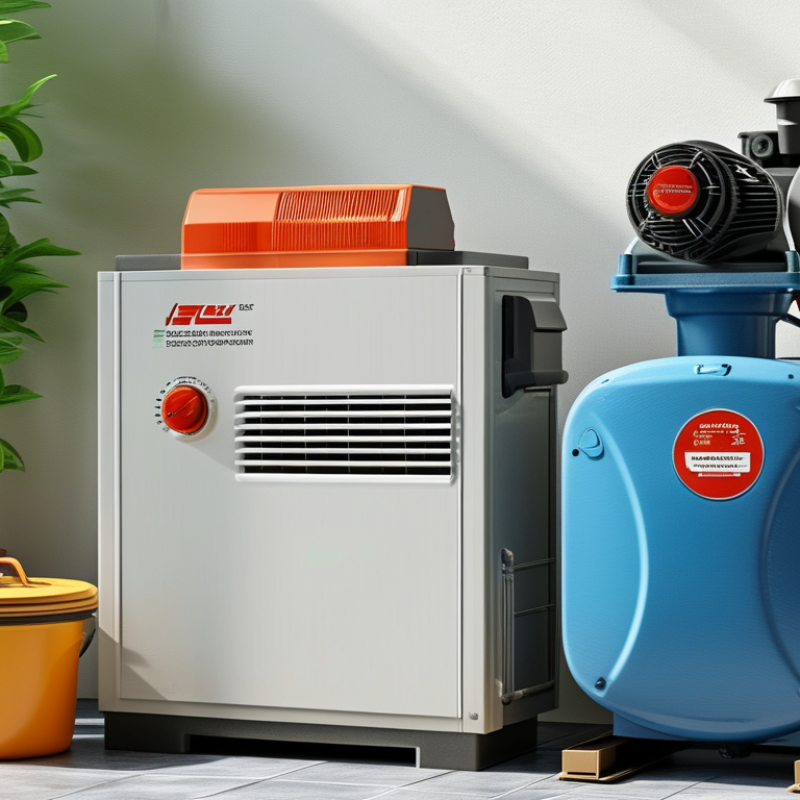
Choosing a Central Air Conditioner Pump requires more than matching a voltage label. The pump must move condensate safely, quietly, and consistently. In most residential systems, this means selecting a condensate removal pump for air conditioners, furnaces, or air handlers. A wrong choice can leave water beside a furnace cabinet, damage drywall, or trigger repeated shutdowns. Small details matter.

The U.S. Energy Information Administration reported that air conditioning represented about 19% of residential electricity use in 2020. Meanwhile, the International Energy Agency’s Future of Cooling report warns that global cooling demand could more than triple by 2050. These figures highlight a practical concern: reliable drainage supports longer equipment operation and fewer emergency interruptions. However, pump efficiency alone should not guide the decision. Check the required lift height, flow rate, reservoir capacity, discharge tubing size, and operating temperature. A pump rated for 20 feet of lift may deliver far less flow at that height. Manufacturer curves are more useful than impressive box claims.

Look for a built-in safety switch, corrosion-resistant materials, and an accessible filter or reservoir. ENERGY STAR and AHRI guidance also remind buyers to consider the complete HVAC system, not one isolated component. Local installers can verify compatibility with the air handler and drain layout. I have found that noise ratings can be misleading in a mechanical room. Field conditions change the result. A quieter pump may still disappoint if vibration reaches the wall. The best selection balances capacity, safety, serviceability, and verified compatibility. It is not always the cheapest option. Sometimes, the overlooked installation detail decides everything.
How to Choose a Central Air Conditioner Pump?

What a Central Air Conditioner Pump Does and Why It Matters

How to Choose a Central Air Conditioner Pump?

A central air conditioner pump usually removes condensate from the indoor coil’s drain pan. As warm air crosses the cold coil, moisture becomes water. The pump lifts that water when gravity drainage is impossible. Without reliable removal, water can overflow onto ceilings, insulation, or electrical components. It can also raise indoor humidity and encourage microbial growth. The U.S. Environmental Protection Agency recommends indoor relative humidity between 30% and 50%. That range is easier to maintain when condensate leaves the system promptly. The U.S. Energy Information Administration’s 2020 Residential Energy Consumption Survey reports that air conditioning uses about 19% of household electricity. A small pump failure can therefore affect comfort, equipment operation, and energy use.

Choose a pump by checking its maximum lift, flow rate, voltage, noise level, and safety switch. Measure the vertical distance first. A pump rated for 20 feet may deliver much less flow near that limit. Select tubing that matches the outlet and avoids sharp bends. A built-in overflow switch should stop the air conditioner if water rises dangerously.

The wrong pump may run constantly. That wastes energy and shortens its service life. A practical service lesson is simple: clean the pan and test the switch, not only the motor. I would not assume “more powerful” means better.

Tips: Compare the pump’s rated lift with your real installation height. Keep the discharge line short and sloped where possible. Test the alarm with clean water twice yearly. Inspect for slime, vibration, and unusual noise. Small oversights matter.

Key Pump Types Used in Central Air Conditioning Systems

Choosing a central air conditioner pump starts with identifying the water circuit. Chilled-water pumps move cooled water from the chiller to air-handling coils. Condenser-water pumps carry heat toward the cooling tower. They serve different temperatures, flow rates, and pressure losses. Mixing them up is an expensive mistake.

Common pump types include end-suction, split-case, vertical inline, and vertical turbine designs. End-suction pumps suit smaller systems with accessible equipment rooms. Split-case pumps handle larger flows efficiently and allow easier maintenance. Vertical inline pumps save floor space, although servicing them in crowded mechanical rooms can be awkward. Vertical turbine pumps fit open cooling-tower basins or deep sump arrangements. The ASHRAE Handbook recommends evaluating flow, head, water quality, redundancy, and control strategy together, not separately.

Variable-speed pumps are increasingly practical. The U.S. Department of Energy reports that variable-frequency drives can reduce motor energy use by roughly 20–50% in suitable applications. The U.S. Energy Information Administration’s 2018 Commercial Buildings Energy Consumption Survey assigns about 15% of commercial building energy use to space cooling. Small control errors therefore become visible on utility bills. A differential-pressure sensor, correctly placed, can prevent over-pumping. Poor sensor placement can do the opposite. Field commissioning often finds pumps running at constant speed after occupancy drops. That is not always a design failure, but it deserves investigation. A pump selected only by horsepower may meet the schedule while wasting energy and creating noisy valves.

How to Choose a Central Air Conditioner Pump?

Typical chilled-water pump flow capacity by pump type used in central air-conditioning systems

End-suction and inline centrifugal pumps are commonly selected for low-to-medium flow applications. Split-case centrifugal pumps suit large chilled-water plants, while multistage pumps are used when higher pressure is required at comparatively lower flow rates. Final selection should consider system flow, total dynamic head, efficiency, control method, temperature, and NPSH requirements.

How to Match Pump Capacity to Your Air Conditioning System

How to Choose a Central Air Conditioner Pump?

Matching pump capacity to your air conditioning system begins with its condensate load. Cooling capacity, indoor humidity, operating hours, and drain conditions all affect water production. A small home system may drain slowly during mild weather, then fill its pan quickly on a hot, humid afternoon. I have seen installers rely on average flow rates and overlook this change.

Measure the required vertical lift from the pump to the discharge point. Include horizontal pipe length, elbows, and the check valve. A pump’s advertised flow often applies at zero lift, which is not realistic. Use its performance chart at the actual head height. The selected flow should exceed the highest expected condensate rate, with a modest reserve, often 20 to 30 percent. Confirm this range with the equipment manual and local requirements.

Do not ignore the receiver size. A small tank may cause frequent cycling when the system runs for long periods. An oversized pump can also create unnecessary noise and energy use. The calculation is not perfect. Weather changes. Occupancy changes. Test the pump by pouring water into the reservoir and watching the discharge line. Confirm that the float switch stops the air conditioner if the outlet blocks. A reliable setup moves water smoothly, stays quiet, and protects the system before the pan reaches its limit.

Essential Factors for Comparing Efficiency, Noise, and Durability

How to Choose a Central Air Conditioner Pump?

When comparing a central air conditioner pump, start with energy efficiency. Check the motor’s rated power, flow rate, and lifting height together. A low-wattage model is not always efficient if it struggles against a high discharge lift. Measure the vertical distance from the pump to the drain line. Then add the pipe’s horizontal length and bends. A pump with useful capacity at your actual lift usually works less often and consumes less electricity. Look for an automatic float switch with stable activation. It should start before water reaches the overflow level.

Noise matters in bedrooms, offices, and finished basements. Review the manufacturer’s sound rating, but treat it as a reference, not a promise. Installation surfaces can amplify vibration. A rubber mounting pad and flexible tubing often reduce rattling. Listen for a steady motor sound during testing. Grinding or repeated clicking deserves attention. Quiet operation helps, especially at night.

Durability depends on more than a thick plastic housing. Inspect the pump’s water-resistant materials, sealed motor design, accessible filter, and replacement parts. A transparent reservoir can reveal sludge before it blocks the float. Clean the tank and intake regularly, even when the pump appears reliable. Small debris causes surprising failures. I would also choose a model with an overflow alarm or secondary safety switch. These features add protection, though they cannot replace proper drainage design. My own comparison would include installation access, because a durable pump becomes frustrating when maintenance is nearly impossible.

How to Choose a Central Air Conditioner Pump? - Essential Factors for Comparing Efficiency, Noise, and Durability

Pump Configuration Typical HVAC Application Typical Flow Range Typical Head Electrical Input Typical Noise Expected Service Life Efficiency and Durability Profile
Standard condensate removal pump Removing evaporator-coil condensate when gravity drainage is not possible Up to 1,000 gal/h
(3,785 L/h)
Up to 20 ft
(6.1 m)
60–100 W 40–55 dBA 3–7 years Low energy demand; reliability depends on clean sensing components, proper drainage, and protection against debris.
High-head condensate pump Basements, commercial air handlers, or installations with long vertical discharge runs Up to 1,500 gal/h
(5,678 L/h)
Up to 30 ft
(9.1 m)
80–150 W 45–60 dBA 3–7 years Provides greater lifting capacity but usually consumes more power; select a pump whose performance curve matches the actual discharge height.
ECM variable-speed circulation pump Chilled-water or hydronic distribution systems requiring automatic flow adjustment 2–20 gal/min
(7.6–75.7 L/min)
5–25 ft
(1.5–7.6 m)
15–200 W 25–45 dBA 8–15 years Usually the most energy-efficient option for variable-load systems; soft starts and speed control can reduce vibration and mechanical stress.
Fixed-speed circulator pump Simple, constant-flow chilled-water or fan-coil circuits 2–25 gal/min
(7.6–94.6 L/min)
5–30 ft
(1.5–9.1 m)
40–250 W 35–55 dBA 7–12 years Simple and serviceable, but it may use more electricity than necessary when system demand falls below the design point.
Dual-pump or backup condensate system Critical cooling areas, server rooms, healthcare spaces, or installations where overflow damage is unacceptable System-dependent System-dependent 100–300 W 45–65 dBA 5–10 years Higher installed cost and energy use, but improved continuity through alarm contacts, redundant pumping, and automatic failure response.
Selection guidelines: Compare the pump's performance at the required flow and total dynamic head rather than comparing maximum ratings alone. Check voltage, control compatibility, wetted-material compatibility, thermal protection, overflow alarm contacts, expected duty cycle, and access for cleaning. Noise values are approximate sound-pressure ranges and can vary with mounting, piping, and room acoustics.

Note: The figures shown are typical engineering ranges for residential and light-commercial HVAC pump categories. Actual values vary by system design and installation conditions; always confirm the manufacturer's published performance curve and installation requirements.

How to Install, Maintain, and Replace a Central Air Conditioner Pump

Choosing a central air conditioner pump usually means choosing a condensate pump. Confirm this first. Some systems drain by gravity and need no pump. For a pumped system, match the pump’s lift height, flow rate, voltage, and tank capacity with the unit’s specifications. The U.S. Department of Energy reports that heating and cooling use about 48% of household energy. Small installation errors can therefore become expensive.

Turn off power before installation. Mount the pump level beside the indoor air handler. Connect the drain tube with a steady upward route, then secure every joint with proper clamps. The discharge line should not sag, kink, or release water near electrical components. Connect the overflow safety switch to the control circuit when permitted by the equipment instructions. A qualified technician should verify wiring and drainage. The drain slope seems obvious, but it is a common failure point.

Maintenance is simple, but often neglected. Pour clean water into the tank every few months and confirm that the float starts the pump. Remove sludge from the tank and inspect the check valve. The DOE states that replacing a dirty air filter can reduce cooling energy use by 5% to 15%. That figure is useful, though real savings depend on climate, airflow, and equipment condition. Replace the pump when it hums without moving water, leaks, trips the safety switch, or starts repeatedly. Do not replace it by horsepower alone. Compare lift performance, outlet size, noise, and safety-switch compatibility. A slightly oversized pump may cycle poorly. That detail deserves a second check.

CAMaster Logo