How to Choose the Best Car Spray Booth for Your Needs?
Choosing the right Car Spray Booth is essential for automotive professionals. The global automotive refinishing market is projected to grow by 5.8% annually. This highlights the increasing importance of high-quality finishes. A Car Spray Booth not only enhances paint quality but also ensures safety and compliance with environmental regulations.
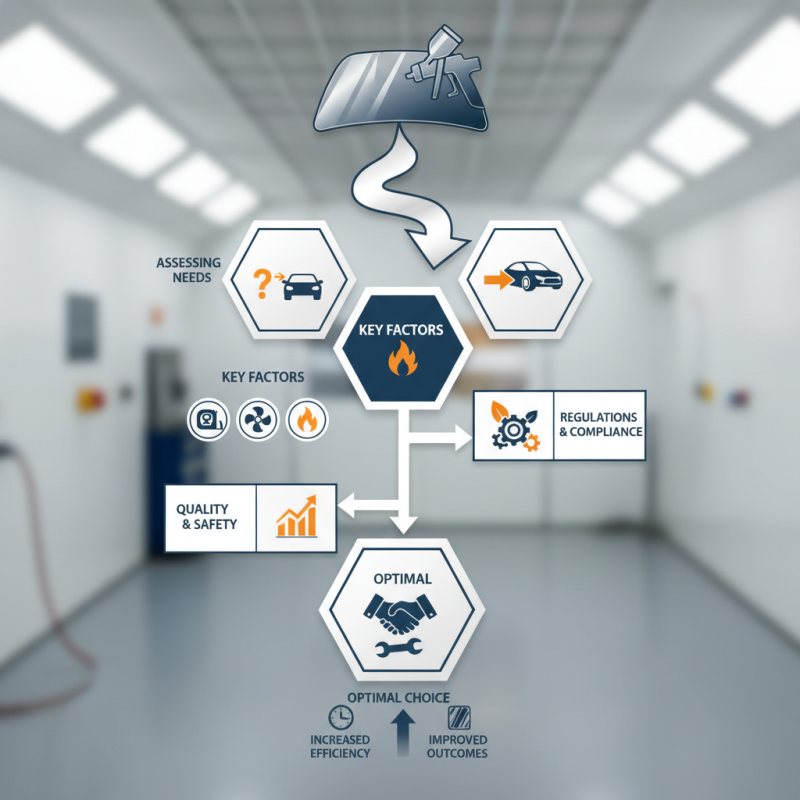
However, many users overlook certain critical factors when selecting a booth. Size, ventilation, and heat source are vital considerations that can influence your investment. Reports indicate that improper booth selection can lead to costly rework and wasted materials. It is crucial to assess the specific demands of your operations.
Investing in a Car Spray Booth should be seen as a long-term commitment. Understanding your unique needs requires research and reflection. Balancing features with budget constraints can be challenging. Ultimately, the right choice can lead to increased efficiency and improved outcomes in automotive painting.
Factors to Consider When Choosing a Car Spray Booth Size and Layout
Choosing the right car spray booth hinges on several critical factors, particularly size and layout. An industry report indicates that 70% of auto body shops face challenges related to booth size. A booth that is too small can limit workflow efficiency and restrict your ability to handle larger vehicles. On the other hand, an oversized booth may lead to unnecessary energy costs and space wastage.
When assessing your needs, consider the types of vehicles you most frequently work on. If your focus is mainly on compact cars, a smaller booth may suffice. However, if you anticipate working on trucks or vans, you'll need to invest in a booth that accommodates greater dimensions. Standard booth sizes range from 12x20 feet to 14x30 feet, and selecting the right size can directly impact productivity levels. It's essential to measure your available workspace accurately and remember that proper layout facilitates smooth operation, leading to lower turnaround times.
Ventilation is another crucial consideration. A well-ventilated booth minimizes the risk of harmful particles affecting both the vehicle finish and worker health. According to data from a recent safety report, adequate air circulation can reduce contamination during the spraying process by up to 50%. Think carefully about where you position doors and windows, as this affects airflow. Each choice can influence both performance and safety, making it necessary to reflect on your specific requirements.
Understanding Different Types of Car Spray Booths: Open vs. Closed
When considering a car spray booth, understanding the differences between open and closed designs is crucial. Open spray booths are cost-effective and easy to set up. They allow for good airflow, which helps in reducing fumes and odors. However, their open nature might lead to contamination from dust and debris. According to a 2022 industry report, over 30% of auto refinishing issues stem from environmental contaminants.
Closed spray booths offer enhanced control over the environment. They provide better filtration systems, ensuring minimal particulate matter. This design is essential for achieving high-quality finishes. Studies show that closed booths can reduce the risk of imperfections by 40%. They also maintain constant temperature, which is vital for paint adhesion and curing.
While closed booths require a higher investment, the quality of the paint job often justifies this expense. It's worth noting that not every shop needs a closed booth for every job. Understanding the specific needs of your operation is vital. Balancing cost with expected finish quality will lead to better decision-making. Choose wisely based on the scope of work and potential volume; it can affect efficiency and profitability significantly.
Essential Features to Look for in a High-Quality Spray Booth
When choosing a spray booth, essential features significantly impact performance. Start with ventilation. A well-ventilated booth reduces hazardous fumes and enhances airflow. Look for booths with adjustable fan speeds. This feature allows better control over air movement. Proper ventilation also helps with curing times.
Next, consider the build quality. High-quality materials resist corrosion and wear. A sturdy frame is crucial for longevity. Check for easy access points for maintenance. Regular cleaning is vital to keep the booth functioning optimally. Moving parts should operate smoothly, indicating good design.
Tips: Always inspect seals and gaskets. These components prevent all sorts of leaks. Also, think about temperature control. Maintaining an optimal environment is crucial during paint applications. A booth with an integrated heating system can improve paint adhesion. Lastly, assess the size of the booth. Ensure it fits your vehicle range comfortably. A crowded space can lead to mistakes and unsatisfactory results.
Choosing the Best Car Spray Booth: Essential Features Comparison
Evaluating Airflow and Filtration Systems for Optimal Paint Quality
When choosing a car spray booth, airflow and filtration systems are crucial. Airflow determines how consistently paint is applied and dried. Proper airflow prevents overspray and ensures an even coat. Insufficient airflow may lead to uneven surfaces, which can be frustrating.
Filtration systems are equally important. High-quality filters capture particles, ensuring that the air inside remains clean. This, in turn, enhances paint quality. Paint contaminants can create imperfections on the surface of the vehicle. Observing the condition of filters regularly is essential. Dirty filters can compromise overall performance.
Evaluating these systems can be challenging. Different settings and conditions affect airflow and filtration. Customization may be necessary for unique projects. Users should document their experiences with different setups. Over time, this record can guide better decisions. Inconsistent results can stem from these overlooked details. Consider revising or upgrading systems based on practical outcomes.
How to Choose the Best Car Spray Booth for Your Needs?
| Dimension | Option 1 | Option 2 | Option 3 |
| Airflow (CFM) | 800 | 1200 | 1500 |
| Filtration Type | HEPA | Electrostatic | Carbon |
| Size (ft) | 16x8 | 20x10 | 24x12 |
| Temperature Control | Manual | Digital | Smart |
| Noise Level (dB) | 70 | 65 | 60 |
Comparing Cost and Maintenance Requirements of Various Spray Booths
When it comes to selecting a car spray booth, cost and maintenance cannot be overlooked. Reports indicate that the average cost of a quality spray booth ranges from $10,000 to $50,000, depending on size and features. Additionally, long-term expenses often accrue from maintenance, which is essential for optimal operation. A study by the National Association of Collision Repair Professionals shows that poorly maintained booths can lead to a 25% increase in energy consumption.
Regular maintenance also affects the lifespan of the equipment. Operators often face the dilemma of spending lower upfront costs on less durable booths versus investing more for reliability. The latter may initially strain budgets but could save money in the long run. Additionally, updated models frequently offer energy-efficient options that may reduce operational costs, a significant factor in operational efficiency.
**Tip:** Always consider the cost of spare parts and labor for maintenance when budgeting for a new booth.
Cleaning and filter replacements are ongoing necessities. Some reports suggest that a booth filter should be replaced every three months to maintain performance. However, compliance with environmental regulations can be an extra burden. Keeping track of these requirements can be challenging for many operators.
**Tip:** Regularly reviewing your booth's performance can uncover maintenance needs before they escalate.