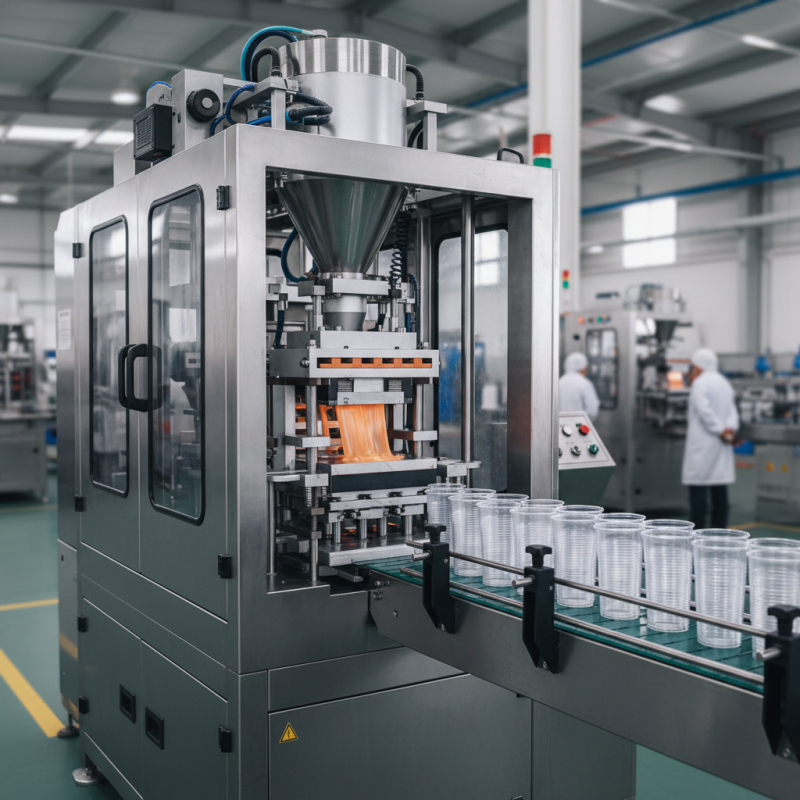
What is a Plastic Cup Machine and How Does It Work?
A Plastic Cup Machine is an essential piece of equipment in the packaging and food service industries. This machine transforms plastic pellets into usable cups efficiently. Understanding its functionalities can help businesses improve their production processes.
The machine operates through several stages. It begins with heating plastic granules until they become a molten state. Then, molds shape the plastic into cups. This process requires precision and expertise to ensure quality output. A well-designed Plastic Cup Machine can enhance productivity and reduce waste.
Despite its advantages, there are challenges in operating these machines. Maintenance is crucial for optimal performance. Additionally, the environmental impact of plastic products raises concerns. Businesses must reflect on sustainable practices. Balancing efficiency and responsibility is vital in today’s industry landscape.
What is a Plastic Cup Machine?
A plastic cup machine is an essential piece of equipment in the manufacturing industry. It efficiently produces a wide range of plastic cups, which are used for various purposes. These machines transform raw plastic into finished products through a series of processes. The method often involves extrusion, molding, and trimming. However, the complexity of these operations can sometimes lead to inefficiencies.
The machine starts by melting plastic pellets. These pellets are heated until they become a molten material. Then, they are forced into molds to create the desired shape. This process requires careful calibration and constant monitoring, as even small variations can affect quality. Operators must be attentive to temperature controls and pressure settings. Any mistake can lead to defects in the cups.
Maintenance is another critical aspect. Regular checks ensure that machinery runs smoothly. Dust and residue can build up, affecting performance. Some operators neglect these details, which can result in costly downtimes. Reflecting on these practices can help improve efficiency. Understanding the nuances of a plastic cup machine allows manufacturers to produce reliable and high-quality products consistently.
Components of a Plastic Cup Machine
A plastic cup machine is an intricate piece of machinery designed for mass production. Understanding its components helps appreciate its functionality. The main parts are the hopper, extruder, mold, and cooling system. The hopper loads raw plastic pellets, which are then heated and melted by the extruder. This process transforms solid plastic into a malleable form.
The mold shapes the melted plastic into cups. Precision is key here. Any flaw in the mold can lead to defective products. The cooling system solidifies the cups, ensuring they maintain their shape. This stage requires balance. Too rapid cooling can cause cracks.
Each component must work harmoniously. If one part malfunctions, the entire production line suffers. Maintenance is crucial for efficiency. Operators sometimes rush this process, leading to oversights. In the drive for speed, quality can slip. A thorough understanding of each component is essential for anyone operating or maintaining a plastic cup machine.
Production Capacity of Plastic Cup Machines
The Manufacturing Process of Plastic Cups
The manufacturing process of plastic cups involves several key steps that highlight its complexity. First, raw materials, primarily polypropylene or polystyrene, are acquired. These polymers are often sourced from petrochemical plants. According to industry reports, the global plastic cup market is projected to reach $5 billion by 2025, indicating a rising demand and continuous production.
The production begins with extrusion. In this step, plastic pellets are heated and melted. The molten plastic is then forced through a die to form a tube. This tube cools and solidifies, ready for the next stage. A noteworthy detail is that the extrusion equipment operates at temperatures of around 200°C. Following extrusion, the tube is cut into smaller pieces, forming pre-formed cups.
Next comes the molding stage, often using vacuum forming or injection molding. Vacuum forming molds the cut pieces into the desired cup shape using heat. Injection molding, on the other hand, injects molten plastic into pre-shaped molds, ensuring precision. Although both methods have advantages, they also carry environmental concerns. The production process generates waste, and the reliance on fossil fuels raises questions about sustainability. Industry studies suggest that up to 30% of produced plastic may end up as waste, highlighting an area needing improvement.
Types of Plastic Cup Machines Available
Plastic cup machines are specialized equipment designed for producing plastic cups efficiently. Various types have emerged, tailored to different production needs. Understanding these types can greatly enhance decision-making for manufacturers.
One common type is the extrusion blow molding machine. This machine uses a continuous extrusion process to shape plastic into a parison, then molds it into cups. It's efficient for high-volume production but may require regular maintenance. Operators must be trained to handle its complexities, which can sometimes result in production inconsistencies.
Another popular variety is the thermoforming machine. This method involves heating plastic sheets and forming them into cups using molds. It’s versatile and can create various cup sizes and styles. However, the initial setup costs may deter some small businesses. The learning curve can be steep for new operators, leading to potential production errors. Regardless of the type chosen, careful consideration ensures better alignment with production goals.
What is a Plastic Cup Machine and How Does It Work? - Types of Plastic Cup Machines Available
| Machine Type | Production Capacity (cups/hour) | Material Used | Automation Level | Power Consumption (kW) |
| Single Station Cup Machine | 2000 | PP, PS | Semi-Automatic | 5 |
| Multi-Station Cup Machine | 5000 | PET, PLA | Fully Automatic | 10 |
| Thermoforming Machine | 3000 | PS, PVC | Fully Automatic | 15 |
| Injection Molding Machine | 4000 | PE, PP | Fully Automatic | 12 |
Applications and Benefits of Plastic Cups in Various Industries
Plastic cups have become a staple in many industries due to their versatility and convenience. From food service to events, plastic cups offer a lightweight and durable solution. Their affordability makes them appealing for both small gatherings and large-scale events. Moreover, they are a hygienic choice, often used for single-use applications to reduce contamination risks. In hospitals, for example, plastic cups ensure safe and quick service for patients.
In the beverage industry, these cups are often used for soft drinks, coffee, and alcoholic beverages. Their ability to retain cold and hot temperatures is essential for customer satisfaction. Additionally, their customization options allow businesses to promote their brand effectively. However, the environmental impact of single-use plastics is a growing concern. It's important for companies to consider sustainable alternatives.
For those considering plastic cups for events or businesses, here are some tips: Choose recyclable options to minimize waste. Evaluate your needs carefully to avoid over-purchasing. Look for suppliers who prioritize eco-friendly materials. Balancing convenience with sustainability is crucial in today’s market.