China Top 10 Conveyor Rollers Manufacturers List

China’s conveyor industry serves mining, ports, warehouses, food processing, and many other operations. Choosing a supplier is not just a price decision. A roller that runs smoothly under light warehouse loads may perform differently beneath abrasive ore or damp material. Details matter.

This guide to China’s Top 10 Conveyor Rollers Manufacturers offers a practical starting point for comparing suppliers. It considers product range, manufacturing capabilities, customization, quality controls, and export experience. Buyers can also look closely at roller diameter, shaft design, bearing protection, sealing, and surface finish. These choices affect noise, maintenance intervals, and how reliably a conveyor tracks over time. Small parts count.

A capable Conveyor Rollers Manufacturer should be able to explain its specifications clearly and provide relevant product documentation. Still, a polished website alone cannot prove consistent production quality. Ask for drawings, material options, inspection details, and samples suited to your operating conditions. Where possible, compare lead times and after-sales support as carefully as unit prices. A low quotation may leave important questions unanswered.

The companies featured in a top-ten list may differ in scale, specialization, and service approach. No single supplier is automatically the best fit for every project. Treat rankings as a shortlist, then verify current capabilities directly with each manufacturer. Even careful research has limits; requirements change, and catalog descriptions can miss real-world constraints. A useful decision begins with clear operating data, not assumptions.
China Top 10 Conveyor Rollers Manufacturers List

Definition and Role of Conveyor Rollers in Material Handling

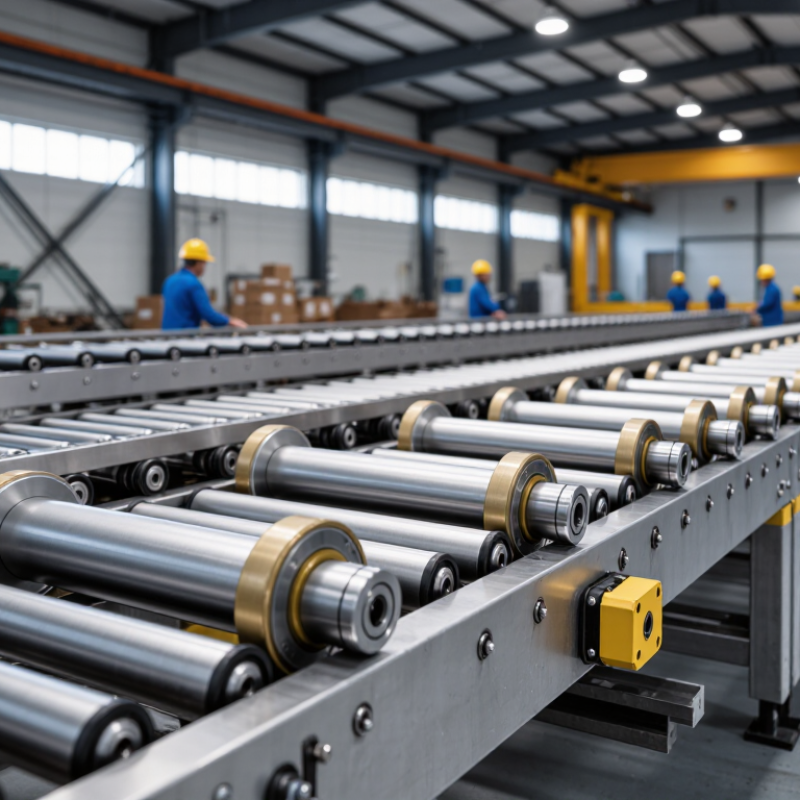
Conveyor rollers are the rotating components that support and guide a conveyor belt or move individual loads along a conveyor frame. They are commonly arranged beneath the belt and at key points along its path. A roller may look simple, but its dimensions, bearing quality, surface, and spacing affect how smoothly materials travel. Small details matter.

In material handling, rollers reduce sliding friction and help carry the weight of products, packages, or bulk materials. Properly selected rollers can limit belt sag, keep loads stable, and reduce unnecessary strain on the conveyor drive. For example, a distribution line moving cartons needs rollers suited to the carton size and load, while a dusty bulk-handling area may need better sealing around bearings. Conditions vary.

Rollers also support tracking and transfers between conveyor sections. If they are misaligned, a belt may drift, wear unevenly, or spill material near a transfer point. Regular checks for noise, heat, damage, and free rotation can reveal problems early. A simple inspection helps. Still, inspection intervals depend on operating hours, load, and surroundings, so a fixed schedule may not fit every site. Roller choice is not glamorous, but overlooking it can disrupt an otherwise well-designed handling system.

Key Criteria for Evaluating Chinese Conveyor Roller Manufacturers

China Top 10 Conveyor Rollers Manufacturers List

Key Criteria for Evaluating Chinese Conveyor Roller Manufacturers

A reliable supplier should prove performance, not just describe it. The global conveyor systems market was valued at USD 10.1 billion in 2023, according to Fortune Business Insights, reflecting demand for dependable material-handling equipment. That figure covers complete systems, not rollers alone, so it should not be treated as a direct measure of roller quality. Still, it highlights why buyers should examine operating life and maintenance costs closely.

Ask for roller runout, shell thickness, bearing details, and load-test records. Request test conditions, not just a pass result. A 1.2-metre roller should turn smoothly under load, without unusual noise or visible wobble. Check whether the manufacturer tests corrosion resistance and sealing against dust and water. ISO 9001 certification can indicate documented quality processes, but it does not guarantee every batch is consistent. Verify inspection reports against a recent production lot. Small gaps matter.

Factory audits offer useful evidence: observe machining, welding, balancing, and final inspection. Compare samples with approved drawings, including shaft dimensions and end-cap fit. Request references from similar applications, such as mining or parcel handling, and ask how failures were tracked. Delivery capacity matters, too; confirm lead times for both standard and custom rollers. Some buyers focus too much on price. I would not. A neat sample is reassuring, but long-term field data is better.

China’s Top 10 Conveyor Roller Manufacturers

China’s Top 10 Conveyor Roller Manufacturers

China’s Top 10 Conveyor Roller Manufacturers should be assessed by more than production capacity. Buyers need consistent dimensions, suitable bearing seals, and reliable delivery records. A roller that runs smoothly under a light load may perform poorly in a dusty warehouse or on a wet production line. Ask suppliers for material specifications, load ratings, and inspection records before comparing quotations.

Industry context matters. Grand View Research estimated the global conveyor systems market at about USD 10.3 billion in 2023 and projected a 4.5% compound annual growth rate from 2024 to 2030. This figure covers complete conveyor systems, not rollers alone, so it should not be treated as a roller-market estimate. Still, it signals sustained demand for dependable conveying equipment. When reviewing Chinese manufacturers, examine shaft straightness, tube-wall consistency, runout tolerance, and bearing performance. Request samples for testing under your actual operating conditions. Paper specifications help, but they do not reveal every weakness.

Tips: Measure roller diameter, face length, and shaft ends before ordering. Check noise and rotation by hand. Ask how defects are tracked. A small detail can matter. Also confirm packaging protects roller ends during transport; this is easy to overlook.

China Conveyor Roller Manufacturers: Common Nominal Roller Diameters

This chart presents widely used nominal conveyor roller diameters for belt conveyor systems in China. The sizes shown are common engineering specifications and are provided as a technical reference rather than a company ranking or brand-specific comparison.

Product Categories, Technologies, and Industry Applications

China Top 10 Conveyor Rollers Manufacturers List: Product Categories, Technologies, and Industry Applications

A practical manufacturer list should compare more than price and production capacity. Common categories include gravity rollers, impact rollers, return rollers, tapered rollers, and motorized rollers. Heavy-duty models often use thicker steel tubes and reinforced housings. Food-processing lines require stainless steel, smooth surfaces, and washdown-resistant seals. Small details matter.

According to Grand View Research, the global conveyor systems market was valued at about USD 10.07 billion in 2022. It is projected to expand at roughly 5.1% annually from 2023 to 2030.

This growth reflects demand from warehouses, parcel centers, mining sites, ports, and automated factories. In dusty transfer zones, labyrinth seals and protected bearings can reduce contamination. In high-speed sorting, low-runout rollers support quieter and more stable movement. Sensor-based monitoring can also detect vibration before failures stop a line.

Selection should match the application, not merely the catalog specification. A mining conveyor may need impact resistance and large load capacity. A warehouse system may prioritize low noise, energy efficiency, and precise rotation. Food lines need corrosion resistance and easy cleaning. Reports from MarketsandMarkets also identify automation as a major conveyor market driver, but automation does not solve poor installation. A ranking can oversimplify quality. Real evaluation still requires load tests, shaft checks, sealing reviews, and after-sales response. Some published specifications may look impressive, yet field performance can differ. That gap deserves closer attention.

How to Select the Right Chinese Conveyor Roller Supplier

China Top 10 Conveyor Rollers Manufacturers List

How to Select the Right Chinese Conveyor Roller Supplier

Choosing a Chinese conveyor roller supplier requires more than comparing catalog prices. Start with your operating conditions. Record belt width, roller diameter, load per roller, speed, temperature, and moisture exposure. A supplier should calculate capacity from these details, not offer a generic model. Ask for drawings with shaft dimensions, bearing type, tube thickness, and permitted runout. Small details matter.

Request production samples before approving a large order. Measure the roller’s outer diameter, shaft alignment, rotation resistance, and surface finish. Listen for unusual bearing noise. It often reveals poor assembly. Ask how the supplier controls welding, pressing, sealing, and final inspection. Reliable factories can provide inspection records, material certificates, and test results linked to each batch. Photos help, but live video inspections show more.

Communication also deserves careful testing. Send one technical question and observe the response. Does the sales team confirm unclear points with engineers? Can they explain tolerances in practical language? Check packaging with drop protection, moisture barriers, and clear labels. Confirm production lead time, replacement procedures, spare parts, and shipping responsibilities in writing. A low quote may hide weak seals or inconsistent steel quality. I have learned that even experienced buyers sometimes focus too heavily on price. That mistake can create belt tracking problems and repeated downtime. A factory visit or independent inspection may cost extra, but it can expose weaknesses before shipment.

CAMaster Logo