China Top 10 RO Booster Pump Manufacturers?

China’s Top 10 RO Booster Pump Manufacturers deserve careful comparison, not quick ranking. A strong supplier should demonstrate stable pressure output, efficient motors, corrosion-resistant materials, and consistent quality control. These details matter when an RO system operates continuously under changing water conditions.

Professor Menachem Elimelech, a leading membrane technology expert, has said, “Energy efficiency is a critical challenge in desalination.” This principle also applies to every Ro Booster Pump. A pump may look powerful on paper, yet consume excessive electricity during daily operation. Buyers should examine flow curves, operating pressure, noise levels, seal design, and after-sales support. Factory testing records can reveal more than polished marketing photographs.

This guide reviews ten Chinese manufacturers through a practical purchasing lens. It considers product range, manufacturing experience, certification evidence, customization capability, delivery reliability, and user feedback. Some companies specialize in compact residential systems. Others focus on commercial and industrial applications. Their strengths are not identical.

The ranking is not perfectly objective. Public information can be incomplete, and customer feedback may reflect different installation conditions. That limitation deserves attention. A quiet pump in a showroom may behave differently beside a hot storage tank. Therefore, readers should request current technical documents and sample performance data before purchasing. The best Ro Booster Pump is not always the cheapest model. It is the model that matches pressure demand, water quality, duty cycle, and maintenance expectations. Small differences can become significant costs over several years.
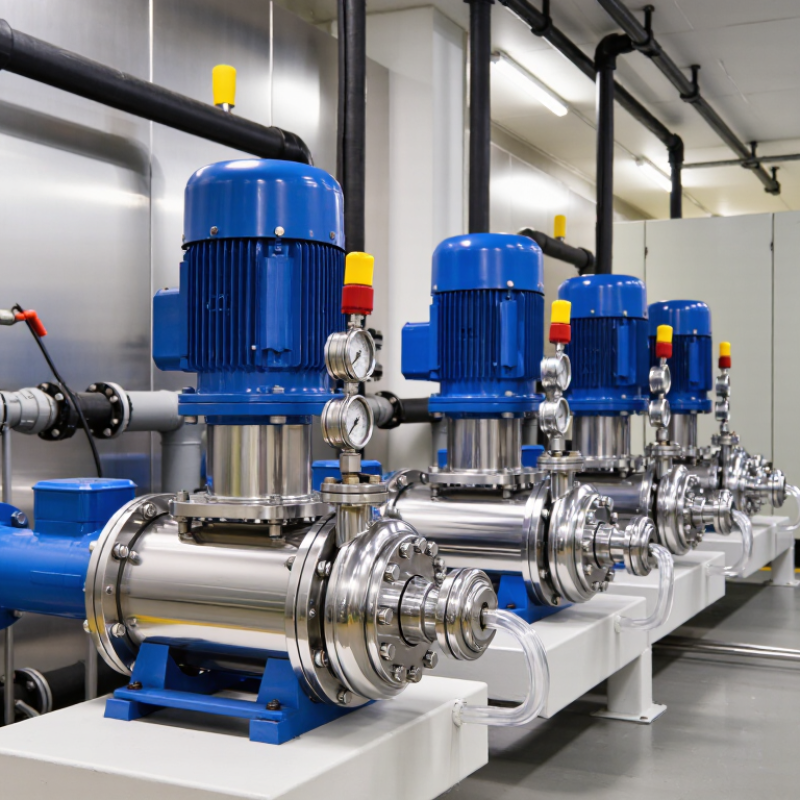
China Top 10 RO Booster Pump Manufacturers?

What Is an RO Booster Pump and Why Does It Matter?

What Is an RO Booster Pump and Why Does It Matter?

When comparing China’s top 10 RO booster pump manufacturers, understand the pump’s job first. An RO booster pump increases water pressure before water reaches the reverse osmosis membrane. This pressure helps the membrane separate dissolved salts, metals, and other unwanted substances more effectively.

Without enough pressure, purified water production may slow, while wastewater volume can increase. A weak pump can also create unstable pressure, noisy operation, or inconsistent water quality. In practical installations, I have found that pressure stability matters more than impressive maximum pressure ratings. Real conditions are often less perfect.

Pump selection should match the membrane size, feed-water pressure, daily demand, and electrical supply. Check the flow rate under working pressure, not only the advertised peak value.

A reliable manufacturer should provide test data, material information, noise guidance, and replacement-part support. These details show engineering discipline and make maintenance easier. However, specifications can still vary between test environments. Ask for clear operating conditions.

Tips:

Measure inlet pressure before choosing a pump. Confirm the pump’s working range and automatic shutoff compatibility. Inspect connections for leaks after installation. Listen for unusual vibration during the first week. A small pressure gauge can reveal problems early. Don’t ignore it.

How to Evaluate Chinese RO Booster Pump Manufacturers

Choosing among China’s top RO booster pump manufacturers requires more than comparing prices or catalog photos. A practical evaluation starts with pump performance. Request pressure, flow, power, noise, and efficiency data at several operating points. Check whether the test conditions match your water system. A high flow rate may hide weak pressure stability. That matters.

Inspect the manufacturer’s engineering and quality systems. Ask about motor insulation, wetted materials, seal design, and protection against dry running. Reliable suppliers should provide traceable production records, inspection reports, and clear warranty terms. Verify whether each pump receives pressure and electrical testing before shipment. Factory visits can reveal useful details, such as organized assembly areas, calibrated instruments, and spare parts storage. A polished website proves little. Independent sample testing is wiser.

Tips: Compare two or three production samples, not one unit. Confirm the actual voltage, inlet pressure, connection size, and duty cycle. Request a performance curve with test dates and equipment details. Speak with technical staff, not only sales representatives. Their answers often show practical expertise. Also assess response time for troubleshooting and replacement parts. A low purchase price can become expensive when support is slow. Some evaluations remain uncertain because factory data may not reflect field conditions. Record every assumption, and leave room for retesting before placing a large order.

China’s Top 10 RO Booster Pump Manufacturers

China’s Top 10 RO Booster Pump Manufacturers are attracting attention as demand for compact water-treatment systems grows. UN-Water’s 2023 update reported that 2.2 billion people lacked safely managed drinking water in 2022. This pressure supports continued investment in reliable reverse osmosis equipment.

A practical top-ten shortlist should assess more than export volume. Factory audits, stainless-steel grades, pressure stability, motor efficiency, noise levels, and replacement-part availability matter greatly. Industry analyses from the International Desalination Association indicate that global desalination capacity has exceeded 120 million cubic metres daily, increasing demand for dependable high-pressure components.

For household and light-commercial RO systems, experienced buyers usually examine operating pressure, flow rate, dry-run protection, and compatibility with 50–100 GPD membranes.

Performance data should be verified.

The strongest Chinese manufacturers typically provide test records, CE or equivalent compliance documents, calibrated pressure curves, and traceable quality-control procedures. Some suppliers also support private-label production, rapid sampling, and customized voltage options for overseas markets.

However, rankings are never perfect. Public shipment data can be incomplete, while advertised flow rates may differ under real membrane resistance and water temperature.

Buyers should request independent testing, warranty terms, and spare-pump availability before selecting among the ten leading suppliers. Field experience shows that a slightly quieter pump often delivers better user satisfaction than a cheaper model with unstable pressure.

Key Differences in Products, Technologies, and Certifications

China Top 10 RO Booster Pump Manufacturers: Key Differences in Products, Technologies, and Certifications

A “top 10” list should not rely on export volume alone. In practice, reliable manufacturers differ in pump stability, testing depth, customization, and after-sales support. Some focus on compact household pumps. Others produce higher-pressure units for commercial reverse osmosis systems. Diaphragm pumps are common because they offer practical pressure and manageable costs. Brushless DC models usually provide quieter operation and longer service life. Multistage designs can deliver smoother pressure, but they may require more precise maintenance.

Certification claims need careful checking. ISO 9001 shows a quality management system, not automatic product quality. CE or RoHS documents may apply only to specific models or markets. Ask for current certificates, test reports, rated pressure, flow data, noise levels, and insulation details. A dependable supplier should also explain motor protection, water-contact materials, and performance at different inlet pressures. This is where many comparisons become incomplete.

Tips: Request a sample before placing a large order. Test it with your actual membrane, tubing, voltage, and inlet water conditions. Check pressure recovery after repeated starts. Inspect vibration, heat, leakage, and wiring quality. Do not trust polished brochures alone. A lower-cost pump may seem attractive, yet unstable pressure can reduce membrane efficiency and increase maintenance. Even experienced buyers can overlook compatibility. That deserves a second review.

How to Select the Right Chinese RO Booster Pump Supplier

China Top 10 RO Booster Pump Manufacturers: How to Select the Right Chinese Supplier

A ranking is only a starting point. Supplier suitability depends on pressure stability, water quality, and service capability. WHO/UNICEF JMP 2023 reports that 2.2 billion people lacked safely managed drinking water in 2022. This highlights the need for dependable treatment equipment, not attractive catalogues. Ask for flow, pressure, voltage, duty cycle, and noise data under real operating conditions.

Request a complete pump curve, not only the maximum pressure. Check performance at your working flow, such as 1.5 m³/h at 5 bar. Confirm wetted materials, seal compatibility, inlet protection, and resistance to frequent starts. The 2024 United Nations World Water Development Report states that agriculture uses about 70% of global freshwater withdrawals. Energy efficiency therefore affects long-term operating costs. A smaller motor may save electricity, but it can also fail under unstable inlet pressure.

Review factory test records and traceable serial numbers. Ask whether each unit receives pressure, leakage, insulation, and endurance testing. ISO certification can support process control, but it does not replace independent verification. Request samples before ordering thousands of units. Inspect vibration, cable glands, fittings, and automatic shutdown behavior. Do not guess. A supplier should provide spare-part lists, response times, warranty exclusions, and installation guidance. One imperfect detail matters: many buyers compare price before checking NPSH or water temperature limits. That decision can create costly field failures. Need better evidence, not louder promises.

China Top 10 RO Booster Pump Manufacturers? How to Select the Right Chinese RO Booster Pump Supplier

The chart presents a practical procurement scoring model for comparing RO booster pump suppliers. Performance and system compatibility should receive the highest priority, followed by quality assurance, compliance, customization capability, delivery reliability, and after-sales support. Buyers should verify all specifications through technical datasheets, test reports, certifications, samples, and factory audits.

CAMaster Logo